Le présent des verbes irréguliers
A morning by the water with Marc, and the ten verbs that refuse to follow a pattern.
Épisodes 1 and 2 gave you the two regular families, the verbs in -er and the verbs in -ir. This text is built on the third kind: the verbs you simply have to learn one by one. They are few, they are short, and they are the ones you will use most.
Texte
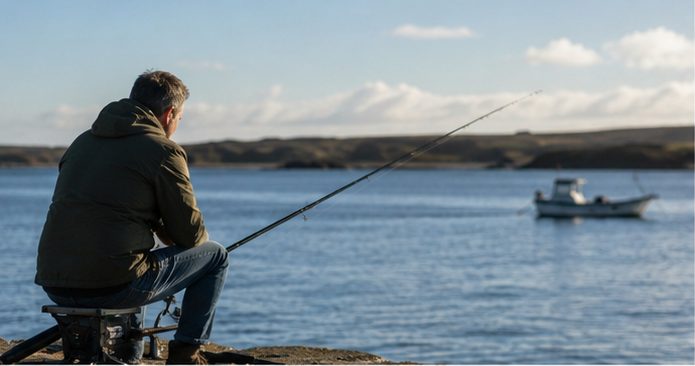
Le pêcheur de Cambridge
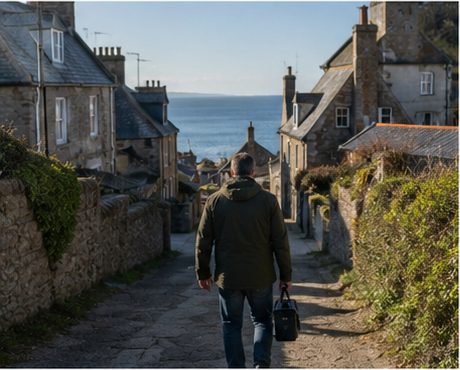
Je m’appelle Marc. J’habite à Cambridge, en Angleterre, mais cette semaine, je suis en France. Je suis dans un petit village.
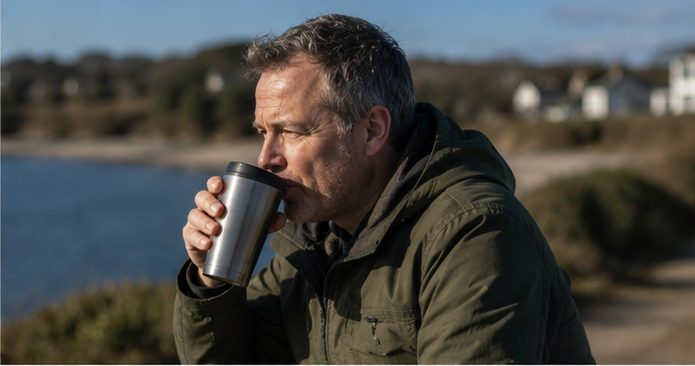
J’aime beaucoup pêcher. Quand je suis en vacances, je prends toujours ma canne à pêche. Le matin, je me lève tôt, je prends un café et je vais à la mer.
Aujourd’hui, il fait beau, mais il fait un peu froid. Je vois un petit bateau sur l’eau.
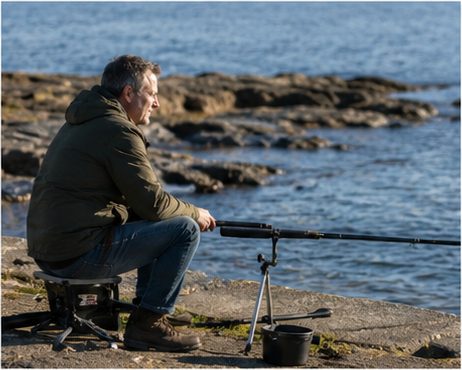
Je ne veux pas parler. Je veux être tranquille et regarder l’eau.
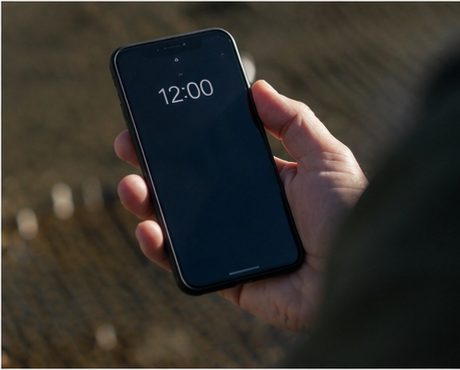
Après une heure, je prends mon téléphone. Je regarde l’heure : il est midi. Je n’ai pas encore de poisson !
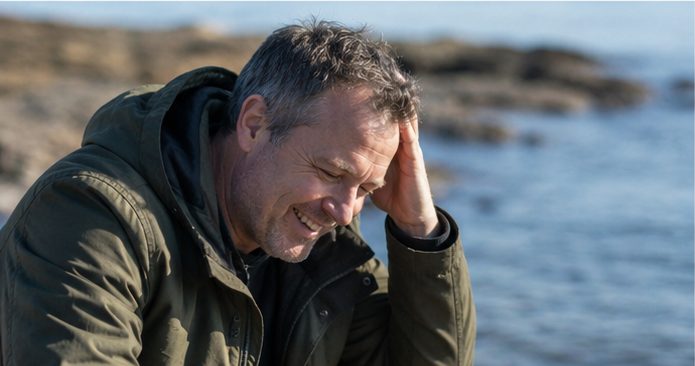
Alors, je ris. Je me dis : « Marc, aujourd’hui, tu ne vas pas manger de poisson ! »
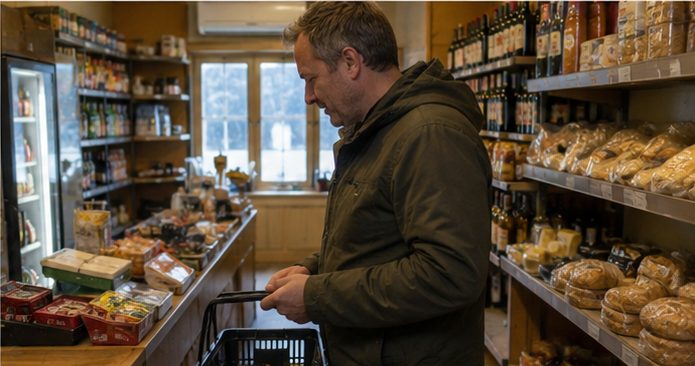
Je prends mon sac et je pars au village. Je veux acheter du pain, du fromage et quelque chose à boire.
Peut-être que demain, le poisson vient !
Hover any word for its sound and its English, or read the whole text in English first. My name is Marc. I live in Cambridge, in England, but this week I am in France. I am in a small village. I love fishing. When I am on holiday, I always take my fishing rod. In the morning I get up early, I have a coffee and I go to the sea. Today the weather is fine, but it is a little cold. I see a small boat on the water. I do not want to talk. I want to be quiet and watch the water. After an hour I pick up my phone. I check the time: it is midday. I have not caught a fish yet! So I laugh. I say to myself: "Marc, today you are not going to eat fish!" I take my bag and I set off to the village. I want to buy bread, cheese and something to drink. Maybe tomorrow the fish will come!
Mots et expressions utiles
26 mots
| Français | English |
|---|---|
| habiter | to live somewhere |
| être en vacances | to be on holiday |
| pêcher | to fish |
| prendre | to take |
| venir | to come, to arrive |
| aller | to go |
| dire | to say |
| rire | to laugh |
| se lever | to get up |
| partir | to leave, to set off |
| faire | to do, to make |
| voir | to see |
| vouloir | to want |
| pouvoir | to be able to, can |
| mettre | to put, to put on |
| s’asseoir | to sit down |
| attendre | to wait |
| regarder | to look at, to watch |
| acheter | to buy |
| boire | to drink |
| revenir | to come back |
| peut-être | maybe, perhaps |
| près de | near, close to |
| quelque chose | something |
| quelque chose à boire | something to drink |
| être tranquille | to be at peace, to have some quiet |
Verbes importants
These ten are the lesson. Learn them in the je form and nothing else for now. Eight are in the text above; mettre and pouvoir are here because you will need them in the very next sentence you say.
| Infinitif | je | English |
|---|---|---|
| prendre | je prends | I take |
| venir | je viens | I come |
| partir | je pars | I leave, I set off |
| faire | je fais | I do, I make |
| voir | je vois | I see |
| vouloir | je veux | I want |
| pouvoir | je peux | I can |
| mettre | je mets | I put, I put on |
| boire | je bois | I drink |
| dire | je dis | I say |
After je veux and je peux, the next verb stays in the infinitive: je veux acheter du pain, je peux revenir demain.
Les expressions du texte — listen and repeat
The twelve sentences Marc actually needs for his morning. Tap a card to turn it over, the speaker to hear it, the star to keep it in your word bank.
- Je suis en vacances. /ʒə sɥi.zɑ̃ va.kɑ̃s/ I am on holiday.
- Le matin, je me lève tôt. /lə ma.tɛ̃ ʒə mə lɛv to/ In the morning I get up early.
- Je prends un café. /ʒə pʁɑ̃.zœ̃ ka.fe/ I have a coffee.
- Je vais à la mer. /ʒə vɛ a la mɛʁ/ I go to the sea.
- Il fait beau, mais il fait un peu froid. /il fɛ bo mɛ il fɛ.tœ̃ pø fʁwa/ The weather is fine, but it is a little cold.
- Je vois un petit bateau sur l’eau. /ʒə vwa.zœ̃ pə.ti ba.to syʁ lo/ I see a small boat on the water.
- Je ne veux pas parler. /ʒə nə vø pa paʁ.le/ I do not want to talk.
- Je veux être tranquille. /ʒə vø.zɛtʁ tʁɑ̃.kil/ I want to be left in peace.
- Je regarde l’heure : il est midi. /ʒə ʁə.ɡaʁd lœʁ il ɛ mi.di/ I check the time: it is midday.
- Je prends mon sac et je pars. /ʒə pʁɑ̃ mɔ̃ sak e ʒə paʁ/ I take my bag and I set off.
- Je veux acheter quelque chose à boire. /ʒə vø.zaʃ.te kɛl.kə ʃoz a bwaʁ/ I want to buy something to drink.
- Peut-être que demain, le poisson vient ! /pø.tɛtʁ kə də.mɛ̃ lə pwa.sɔ̃ vjɛ̃/ Maybe tomorrow the fish comes!
Quel verbe ?
Every option is a je form. Choose the one that makes sense.
Complétez le texte
Marc’s morning, in his own words. Put the verb in brackets into the je form.
Associez la photo et la phrase
Click a photo, then click Marc’s sentence that goes with it.
Non ! Corrigez
The sentence under the photo is wrong. Correct it, still with je. Remember: after ne … pas, the article un / une / du becomes de.
Exemple
Faux : Je prends un thé.
Vrai : Je ne prends pas de thé. Je prends un café.
Le villageLe matinÀ la merLe silenceÀ midiAu villageVrai ou faux ?
Marc says these sentences. Read the text again: is he telling the truth?
Je suis Marc
You are Marc now. Look at the photo and finish his sentence out loud, then click the card to see one possible ending.
Cette semaine, je suis…Le matin, je prends… et je vais…Sur l’eau, je vois…Je ne veux pas… Je veux…Je prends mon téléphone. Je n’ai pas…Au village, je veux acheter…In pairs: one reads the beginning, the other finishes it as Marc, then swap.
Et vous ?
Now finish each sentence about yourself, out loud. Then click the card for one possible answer — yours will be different.
In pairs: one reads the beginning, the other finishes it, then swap.
Production écrite
Every sentence starts with je. Use at least five of the ten verbs, one sentence with je ne … pas, and one with je veux or je peux plus an infinitive.