Le présent des verbes en -ER
Talk about your day, and ask someone else about theirs using vous.
describe your working day (je travaille, je déjeune, je rentre),
ask someone you have just met about theirs (Vous habitez où ? Vous travaillez dans quel domaine ?),
talk about yourself and a colleague together (nous parlons, nous préparons).
Texte

La journée de Sophie
Salut, moi c’est Sophie ! J’habite à Lyon. Je travaille comme agente immobilière. J’aime beaucoup mon travail parce que je rencontre des gens différents tous les jours.
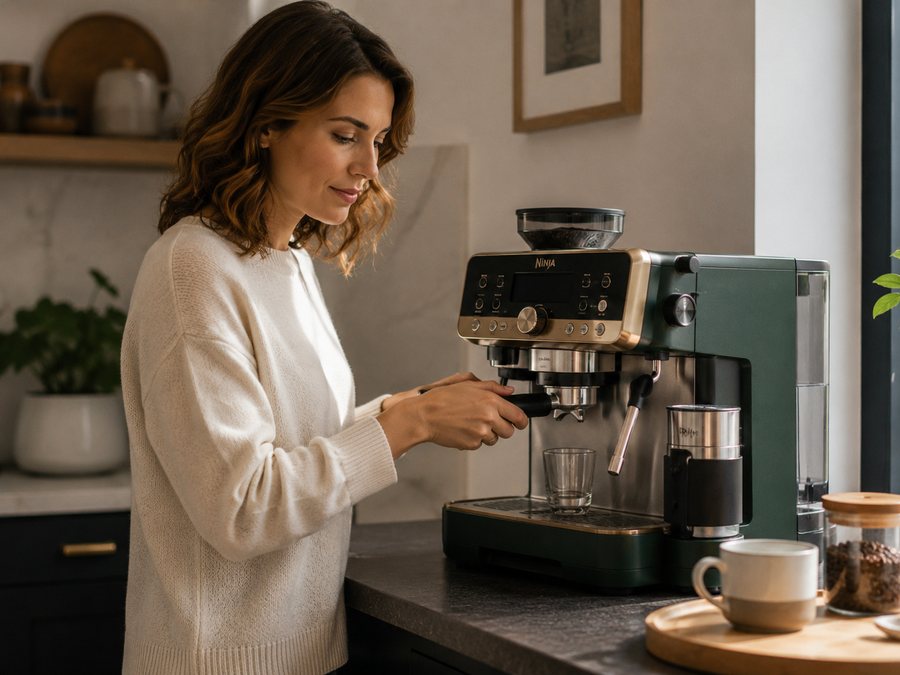
Le matin, je commence à travailler à sept heures. Je prépare un café et j’écoute la radio.
À huit heures et demie, j’arrive au bureau. J’appelle mes clients, j’explique les prix et j’organise des visites.

À midi, je déjeune avec ma collègue Camille. On parle de notre travail et on prépare notre week-end.
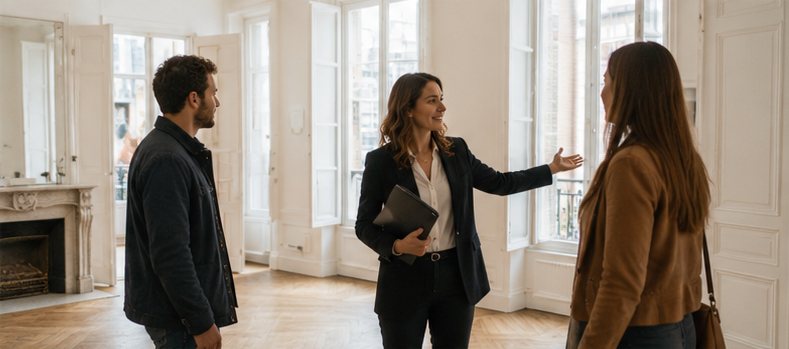
L’après-midi, je visite des appartements avec mes clients. Je réponds à leurs questions et je leur montre chaque pièce : le salon, la cuisine, la chambre et la salle de bains.

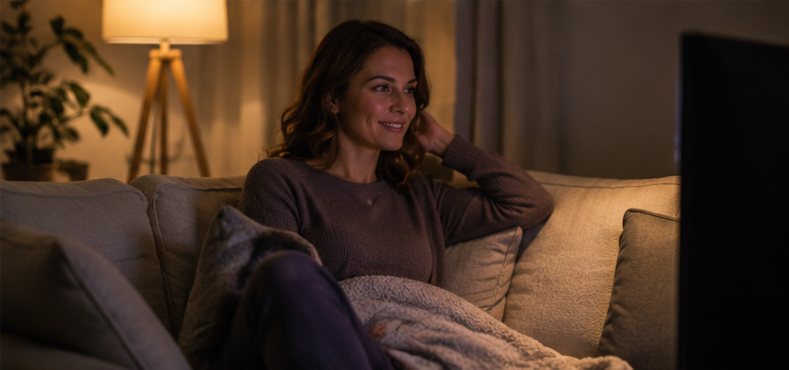
Le soir, je rentre à la maison. Je cuisine, je regarde un film ou j’écoute de la musique.
J’aime mon travail : chaque jour est différent.
Almost every verb in this text is a regular -er verb, plus être, which you already know. There is just one exception, répondre, from a different verb family we will meet later. Hi, I'm Sophie! I live in Lyon. I work as an estate agent. I like my job a lot because I meet different people every day. In the morning I start work at seven. I make a coffee and listen to the radio. At half past eight I get to the office. I call my clients, I explain the prices and I arrange viewings. At midday I have lunch with my colleague Camille. We talk about our work and we plan our weekend. In the afternoon I show flats to my clients. I answer their questions and I show them every room: the living room, the kitchen, the bedroom and the bathroom. In the evening I go home. I cook, I watch a film or I listen to music. I like my job: every day is different.
La journée de Sophie en six photos
Hide the sentences, look at the photos and tell the day out loud. First with je, as Sophie. Then with elle, as if you were describing her to a friend. With the sentences hidden, click any single photo to check just that one.
Au bureau — Sophie et un client
Client : Bonjour, madame. Vous travaillez ici ?
Sophie : Oui, je travaille ici. Vous cherchez un appartement ?
Client : Oui, nous cherchons un appartement avec deux chambres.
Sophie : Vous habitez à Lyon ?
Client : Non, nous habitons à Grenoble. Nous arrivons à Lyon en septembre.
Sophie : Très bien. Vous préférez le matin ou l’après-midi pour la visite ?
Client : Nous préférons le matin.
Sophie : Parfait. Je téléphone au propriétaire et j’organise la visite.
The rule
Take the infinitive, drop -er, add the ending. Roughly 90% of French verbs work exactly like this.
| Pronom | parl-er | Sound | English |
|---|---|---|---|
| je | parle | /paʁl/ | I speak |
| tu | parles | /paʁl/ | you speak (informal) |
| il / elle / on | parle | /paʁl/ | he, she speaks |
| nous | parlons | /paʁ.lɔ̃/ | we speak |
| vous | parlez | /paʁ.le/ | you speak (polite / plural) |
| ils / elles | parlent | /paʁl/ | they speak |
The key point about pronunciation. The endings -e, -es and -ent are all silent.
So je parle, tu parles, il parle and ils parlent sound exactly the same: /paʁl/.
Only two forms are different to the ear: nous parlons /ɔ̃/ and vous parlez /e/.
Je + vowel → J’
Before a vowel or a silent h, je drops its vowel:
La négation
Put the verb inside a sandwich: ne … pas. Before a vowel, ne becomes n’.
J’habite à Paris. → Je n’habite pas à Paris.
Les verbes du texte — listen and repeat
- J’habite à Lyon. /ʒa.bit a ljɔ̃/ I live in Lyon.
- Je travaille comme agente immobilière. /ʒə tʁa.vaj kɔm a.ʒɑ̃t i.mɔ.bi.ljɛʁ/ I work as an estate agent.
- Je commence à huit heures et demie. /ʒə kɔ.mɑ̃s a ɥi tœʁ e də.mi/ I start at half past eight.
- J’appelle mes clients. /ʒa.pɛl me kli.jɑ̃/ I call my clients.
- Je déjeune avec ma collègue. /ʒə de.ʒœn a.vɛk ma kɔ.lɛɡ/ I have lunch with my colleague.
- On parle de notre travail. /ɔ̃ paʁl də nɔtʁ tʁa.vaj/ We talk about our work.
- Le soir, je rentre à la maison. /lə swaʁ ʒə ʁɑ̃tʁ a la mɛ.zɔ̃/ In the evening I go home.
- Je regarde un film. /ʒə ʁə.ɡaʁd œ̃ film/ I watch a film.
- Vous habitez où ? /vu.z‿a.bi.te u/ Where do you live?
- Vous travaillez dans quel domaine ? /vu tʁa.va.je dɑ̃ kɛl dɔ.mɛn/ What field do you work in?
- Vous commencez à quelle heure ? /vu kɔ.mɑ̃.se a kɛ lœʁ/ What time do you start?
- Je ne travaille pas le samedi. /ʒə nə tʁa.vaj pa lə sam.di/ I don't work on Saturdays.
Complete the conjugation
Type the verb form only, without the pronoun. For example, nous parlons → type parlons.
Choose the correct form
Click an option and you get the answer straight away.
Complete the text
The same story, but now about Sophie. Put the verb in brackets into the correct form.
Associez la photo et la phrase
Click a photo, then click the sentence that goes with it. Every sentence is in the elle form.
Regardez la photo et répondez
Three questions per photo: où, avec qui, qu’est-ce qu’elle fait. Click an answer and you get the result straight away.
Le matinAu bureauÀ midiL’après-midiNon ! Corrigez
Look at the photo: the question is wrong. Say no, then say what is true. One small rule for this exercise: after ne … pas, the article un / une / du becomes de (un thé → pas de thé), while le / la and au do not change.
Exemple
Question : Sophie prépare un thé ?
Réponse : Non, elle ne prépare pas de thé. Elle prépare un café.
Le matinAu bureauÀ midiL’après-midiLe soirLe soirVrai ou faux ? — La journée de Sophie
Read the text again, then decide: true or false?
Vrai ou faux ? — Au bureau
Now read the dialogue between Sophie and the client, and decide: true or false?
Répondez aux questions
Answer with a short phrase, as in the example. A full sentence is accepted too.
Exemple
Question : Sophie travaille où ?
Réponse : À Lyon. (or: Elle travaille à Lyon.)
Ask the question with « vous »
Exemple
Sophie : Je travaille à Lyon.
Vous : Vous travaillez à Lyon ?
Décrivez la photo
Answer the three questions out loud, in full sentences, before you click. The card then shows one possible answer. Yours does not have to be the same.
Où est-elle ? Qu’est-ce qu’elle prépare ? Qu’est-ce qu’elle écoute ?Où est-elle ? Avec qui parle-t-elle ? Qu’est-ce qu’elle explique ?Où sont-elles ? Avec qui déjeune Sophie ? De quoi parlent-elles ?Où est-elle ? Avec qui ? Qu’est-ce qu’elle montre ?Où est-elle ? C’est le matin ou le soir ? Qu’est-ce qu’elle fait ?Où est-elle ? Qu’est-ce qu’elle fait ? Elle travaille ?In pairs: one asks the three questions, the other describes the photo, then swap.
Et vous ?
Say your own answer out loud in a full sentence first, then click the card to see a model answer.
In pairs: one asks with vous, the other answers with je, then swap.
Production écrite
Plan de l’épisode (нотатки для викладача, 60 хв)
| Час | Етап | Що робимо |
|---|---|---|
| 5 хв | Lead-in | Банер над текстом: C’est qui ? Elle travaille où ? Виходимо на професію Софі. Повторення être з Episode 1. |
| 8 хв | Reading for gist | Читають текст один раз. Одне запитання: Sophie aime son travail ? Pourquoi ? Далі Exercice 7 (vrai / faux). |
| 4 хв | Vocabulary check | Exercice 4: зіставлення фото і речень. Швидка перевірка розуміння без перекладу, і перша зустріч із формами elle. |
| 6 хв | Photo questions | Exercice 5 усно, потім кліками: Où ? Avec qui ? Qu’est-ce qu’elle fait ? Учень чує три типи запитань і відповідає короткою фразою. |
| 7 хв | Reading for detail | Exercice 9: короткі відповіді на запитання до тексту. Тут учень уперше сам продукує форми elle письмово. |
| 10 хв | Language focus | Учень сам виписує дієслова з тексту й помічає закінчення. Далі таблиця parler і блок про вимову. |
| 10 хв | Controlled practice | Exercices 1 і 3. Самоперевірка кнопкою «Vérifier», викладач працює лише з тими місцями, де застряг. |
| 6 хв | Negation | Exercice 6 за фото: спершу усно хором, потім письмово. Тут же коротко правило un / une → de після ne … pas. |
| 5 хв | Semi-controlled | Exercice 10: перетворення je → vous. Це міст до вільного мовлення. |
| 4 хв | Speaking 1 | Exercice 11: опис фото у парах, три запитання і повна відповідь. Перед цим смуга з шести фото з прихованими підписами, переказ дня через je і через elle. |
| — | Devoirs | Діалог «Au bureau», Exercices 2 і 8, Exercice 12 усно перед дзеркалом, а також Production écrite «Ma journée». |
Anticipated problems: 1) учень вимовляє -ent у ils parlent; 2) плутає nous -ons і vous -ez на слух; 3) забуває елізію j’; 4) ставить pas перед дієсловом; 5) для англомовного учня окремо варто показати, що je travaille покриває і «I work», і «I am working».