Before you read: Key words
- ruins the remains of a building that has been destroyed or badly damaged руїни
- trace a sign or mark left by someone or something that has gone слід, ознака
- inspector a police officer of middle rank who investigates crimes інспектор
- evidence information or objects that help prove whether something is true докази, свідчення
Match the word to its meaning
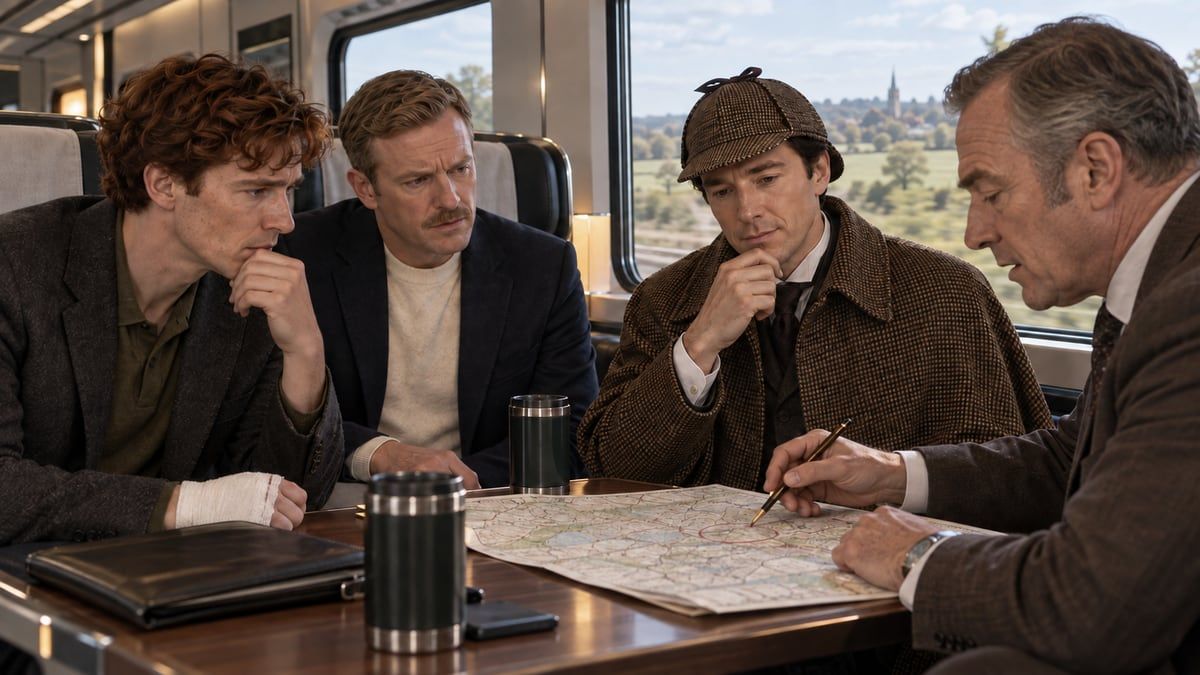
Holmes went straight to Scotland Yard and told the police everything we learned. Within a few hours, we were on the train to Eyford with Inspector Bradstreet and several officers.
Bradstreet spread a map on his knee and drew a circle around Eyford. “The house must be somewhere within this distance,” he said.
When we arrived, smoke hung in the air. A house was on fire, the house of a Dr Becher, who let rooms to Colonel Stark and his associates.
We ran to the scene. Victor recognised the gate and the garden path at once.
“That’s the place,” he said.
Holmes examined the scene carefully. Victor remembered the oil lamp in the bedroom. He escaped through the window and knocked over the oil lamp. That started the fire.
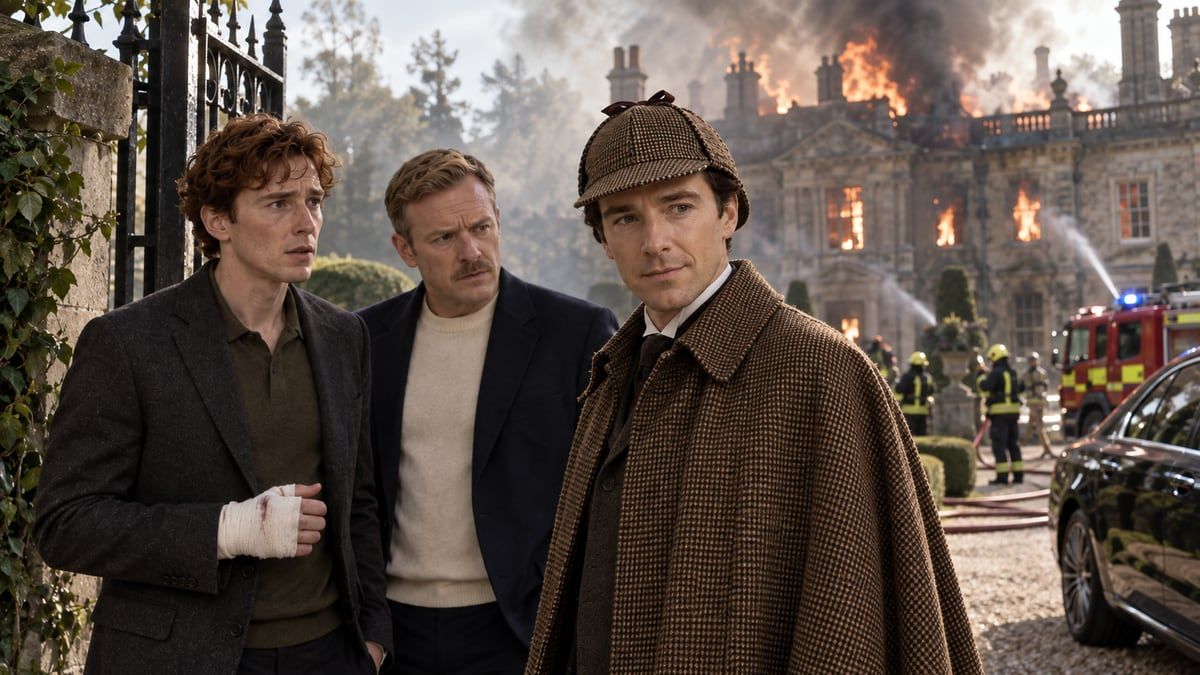
The firemen searched the ruins. Inside, they found a human thumb, Victor’s. They also found large quantities of metal and equipment used to press coins. This was the evidence they needed. But the criminals themselves vanished without a trace.
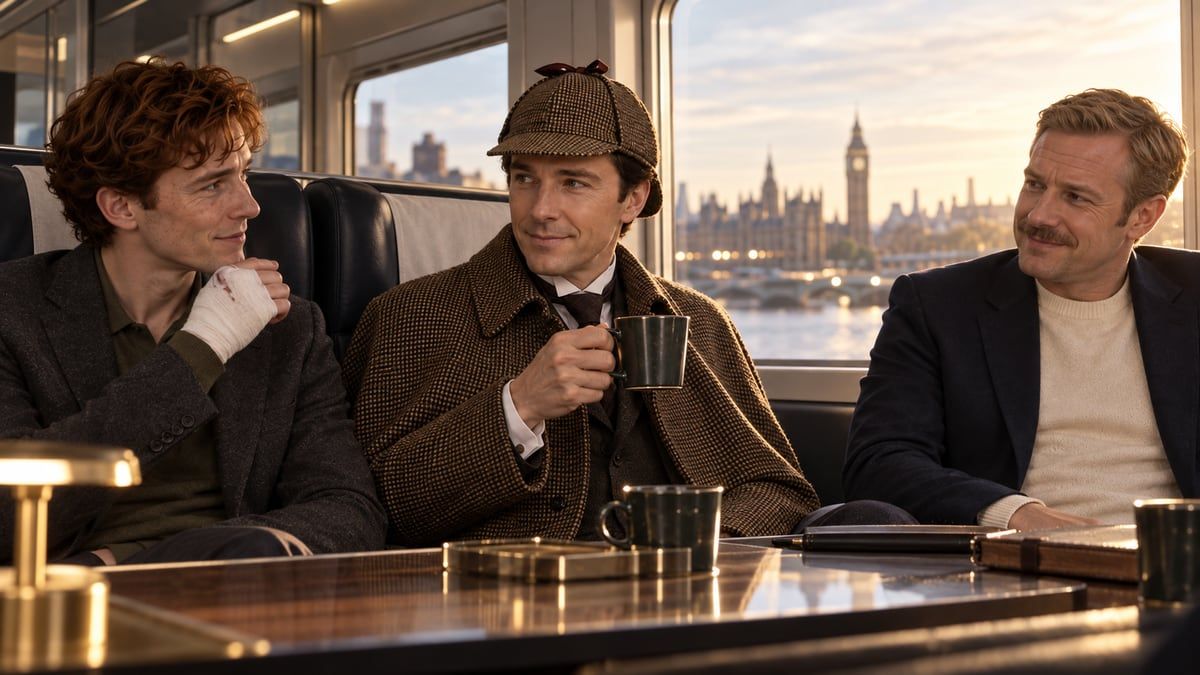
“Well,” said Victor sadly, as we boarded the train back to London, “it’s been a tough experience. I lost my thumb, and I never received my fifty guineas. So what exactly have I gained?”
“Experience,” Holmes replied, laughing. “That may be more valuable than you think. And now, at least, you’ll always be the most interesting person at any dinner party.”
After you read
1. What did Bradstreet do with the map?
He spread the map on his knee and drew a circle around Eyford, the area where they expected to find the house.
2. What did the firemen find in the ruins?
They found Victor’s thumb, large quantities of metal, and equipment for pressing counterfeit coins. But the criminals vanished without a trace.
3. What did Holmes say was Victor’s reward? Do you agree?
Holmes said Victor’s reward was “experience”, and that it might be more valuable than money. He also joked that Victor would always be the most interesting person at dinner.
Past Simple Practice
Fill in the gaps
Write the Past Simple form of the verb in brackets.
Example: Holmes went (go) to Scotland Yard.
Bradstreet (spread) the map and (draw) a circle around Eyford. They (arrive) and (see) smoke in the air.
Fill in the gaps
Write the Past Simple form of the verb in brackets.
The firemen (search) the ruins. They (find) Victor’s thumb and equipment for pressing coins. The criminals (vanish) without a trace.
Sentence order
Put the sentences in the correct order.
Talk to Holmes
Sherlock Holmes has a few questions for you. Answer using Past Simple.
Holmes:
“Victor lost his thumb and his money, but he gained a story and a lesson. Have you ever lost something but gained something more valuable in return?”
Holmes:
“The criminals vanished without a trace. Do you think they escaped for good, or do you think justice catches up with everyone eventually?”
Listening Practice
Listen to the audio above. Then fill in the missing words in the text and check your answers.
Speaking Practice
Record your answers
Press record and answer the questions out loud. No pressure, no grades. Just you and your English.
- What did Bradstreet do with the map, and why?
- What evidence did the police find in the ruins?
- Why did the fire start? How does this connect to Victor’s escape?
- Do you think Holmes’s answer (“experience”) was a good one? Why?
- What was the most surprising moment in the whole story? Tell it in your own words.